Reviewing the Matcha Latte Social Club Embroidery Design
As a designer who spends half my life staring at digitized files and the other half pulling bobbins out of tangled messes, I approach every new machine embroidery design with a healthy dose of skepticism. We have all seen those cute previews that look fantastic on a white digital background but turn into a puckered disaster once they hit actual fabric. Recently, I downloaded the Matcha Latte Social Club Embroidery file to test its viability for a client’s spring collection. Here is my honest breakdown of how this design performs in the real world, beyond the glossy marketing images.
First Impressions: Mood and Visual Personality
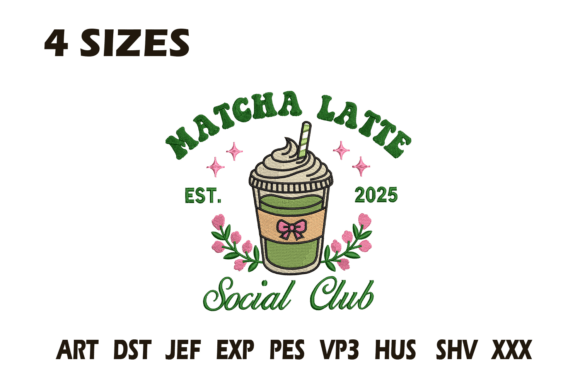
The first thing that strikes you about the Matcha Latte Social Club Embroidery is its whimsical charm. It does not try to be hyper-realistic, which is often a trap for beginner digitizers. Instead, it leans into a playful, illustrative style that feels modern and inviting. The layout suggests a cozy cafe vibe, making it an excellent candidate for lifestyle branding or personal gifts. When I loaded the embroidery file into my software, the color palette immediately suggested soft greens, creams, and warm browns. This thematic consistency is crucial because it tells me the digitizer understood the subject matter—Food and beverage themes require a specific warmth to feel appetizing rather than sterile.
For Etsy sellers and craft business owners, mood is everything. This design naturally belongs on items that evoke comfort. It is not aggressive or loud; it is friendly. That subtle distinction matters when you are trying to build a brand identity centered around relaxation or self-care.
Real-World Application: From Tote Bags to Sweatshirts
I decided to test this design on two very different substrates to gauge its versatility. First, I stitched it onto a heavy canvas tote bag design prototype. The result was crisp. The lines held their shape well against the textured weave of the canvas. Next, I moved to a fleece-lined sweatshirt embroidery project. This is where many designs fail due to excessive stitch density, causing the fabric to pucker or the design to sink into the pile. Fortunately, this design performed admirably, though it required careful attention to stabilization.
This versatility makes it a strong asset for custom apparel lines. Whether you are creating holiday embroidery gifts for friends or stocking your small shop product inventory, the design scales reasonably well. It works as a central chest piece on a tee or a smaller accent on a sleeve. For personalized gift creators, adding a name below the main graphic would be straightforward, provided you choose a font that matches the playful weight of the original artwork.
Technical Considerations and Stitch Behavior
Let us talk about the mechanics. While I do not have the exact stitch count here, visual inspection of the pathing reveals a smart mix of satin stitch borders and fill stitch interiors. The use of running stitch for finer details helps keep the overall bulk down. This is critical if you plan to use this on baby embroidery items, where softness against sensitive skin is non-negotiable. A dense, heavy design can feel scratchy and stiff, but this one appears to maintain a lighter touch.
However, caution is needed with thread colors. The green tones typical of matcha can look muddy if your thread quality is low or if the tension is off. I recommend using high-sheen rayon or polyester threads to give the "latte" elements a slight sheen, contrasting nicely with the matte finish of the "matcha" sections. Always check your stabilizer choice. For stretchy fabrics like jersey tees, a cut-away stabilizer is mandatory to prevent distortion after washing. For woven towels or aprons, a tear-away might suffice, but test first.
Where to Use It Carefully
Not every surface is a good match. I would hesitate to use this specific design on very thin, slippery fabrics like silk or lightweight rayon without extensive testing. The fabric texture plays a huge role in how the final finished product looks. On curved surfaces like caps, the design might distort if it is too wide. If you are aiming for an embroidered patch look, ensure your hoop size accommodates the full width without cropping essential details. Tiny lettering or intricate corners can get lost if the needle deflection is high, so always run a test stitch on scrap fabric identical to your final material.
Also, consider the washing instructions. Items like kitchen towels or aprons undergo rigorous cleaning. Ensure your thread colors are colorfast and that the stitch density is secure enough to withstand frequent agitation without unraveling.
Commercial Value and Brand Consistency
From a business perspective, the Matcha Latte Social Club Embroidery adds tangible value. It elevates a basic blank garment into a handmade product with perceived higher worth. Customers are drawn to unique, cohesive aesthetics. Using this design across a range of products—pillow covers, tea towels, and apparel—creates brand consistency. It signals professionalism and attention to detail.
For digital embroidery file sellers, this type of design is highly marketable because it taps into current trends. Coffee and tea culture are evergreen niches. When creating printable mockup assets for your online store, ensure the lighting highlights the texture of the stitches. Buyers want to see the dimensionality of the applique design or fill work to trust the quality.
Final Designer Notes
Before you commit to a large production run or list this as a new item in your design assets library, follow these steps:
- Test on scrap fabric: Never skip this. Check for puckering and thread breaks.
- Check contrast: View your design in black and white to ensure the details remain visible without color cues.
- Verify licensing: Confirm whether the license allows for commercial use of finished items. This is vital for commercial embroidery projects.
- Inspect small details: Zoom in on the digitized file to check for unnecessary jump stitches or dense areas that might cause needle heat.
- Compare backgrounds: Stitch on both light and dark fabrics to see if underlay stitches show through.
In conclusion, the Matcha Latte Social Club Embroidery is a solid, versatile addition to any designer’s toolkit. It balances aesthetic appeal with technical practicality, making it suitable for a wide range of embroidery project types. With proper stabilization and thread selection, it can produce high-quality, professional results that resonate with customers looking for charm and whimsy in their everyday items.