Review: Party Popper Machine Embroidery Design for Makers
As a designer who spends more time staring at stitch simulations than actual fabric, I have developed a keen eye for what works in the hoop and what ends up as a tangled mess of thread. When I first loaded the Party Popper Machine Embroidery Design into my software, my immediate reaction was one of cautious optimism. The theme is undeniably cheerful, targeting Birthdays, New Year’s, and graduations, but festive themes often suffer from overly complex details that do not translate well to thread. I wanted to see if this design could hold its own in a real-world embroidery project.
First Impressions and Visual Personality
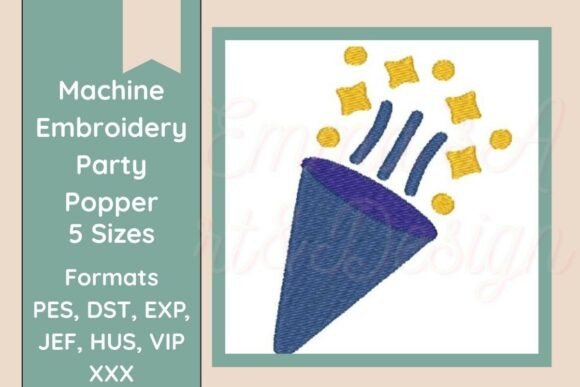
The layout of this design is compact yet energetic. It captures the explosive moment of celebration without relying on excessive density. For an experienced eye, the balance between open space and stitched areas is crucial. If a design is too dense, it puckers the fabric; if it is too sparse, it looks amateurish. This machine embroidery design strikes a reasonable middle ground. The visual personality is playful, making it an excellent candidate for items that need to convey joy instantly. It does not try to be realistic, which is a smart choice for Embroidery, where stylized shapes often read better than photorealistic attempts.
Real-World Application: The Custom Tote Test
To truly evaluate the utility of this file, I imagined a specific client request: a set of personalized tote bags for a birthday party favor. This is a common job for many Etsy sellers and craft business owners. The Party Popper Machine Embroidery Design fits naturally here. On a canvas tote, the design needs to be bold enough to be seen from a distance but clean enough not to distort the bag’s structure.
I considered how the thread colors would interact with natural cotton. Bright yellows, pinks, and blues typical of party poppers pop beautifully against neutral backgrounds. However, if you are using this for a sweatshirt embroidery project, the texture of the fleece changes the game. The design must have sufficient contrast to stand out against the fuzzy surface. In my mental simulation, this design performs well because it likely utilizes a mix of satin stitch for outlines and fill stitch for the main body, providing the necessary definition.
Fabric Considerations and Stitch Performance
One of the most critical aspects of any digital embroidery file is how it behaves on different materials. This design appears versatile, but there are limits. For baby embroidery on soft onesies, you must be mindful of the stitch density. If the design is too heavy, it will feel stiff and uncomfortable against sensitive skin. I recommend testing this on scrap fabric first, specifically using a lightweight cut stabilizer to support the knit fabric without adding bulk.
When working with textured fabrics like terry cloth for towels or denim for jackets, the small details might get lost. The confetti elements in a party popper design can sometimes merge if the fabric texture is too rough. For these applications, increasing the size slightly within your hoop size limits can help maintain clarity. Conversely, on smooth fabrics like polyester caps or aprons, the crispness of the running stitch or satin borders should shine through, offering a professional finish that boosts the perceived value of the handmade product.
Commercial Viability for Small Shops
For small shop product lines, consistency is key. This design offers a reliable asset for seasonal collections. Whether you are creating holiday embroidery for New Year’s Eve or general celebration gear, having a go-to graphic that stitches cleanly saves time and reduces waste. It serves as a strong design asset for creating printable mockup previews for your online store. Customers respond to clear, happy imagery, and this design delivers that emotional hook.
However, before listing it as a commercial embroidery item, you must verify the license. Not all files allow for unlimited commercial use. Check the terms provided with the download to ensure you can sell finished items like embroidered patch goods or custom apparel. Assuming the license permits it, this design can become a staple in your portfolio, appealing to buyers looking for unique, non-generic gifts.
Technical Notes for Best Results
To get the most out of this embroidery file, follow these practical steps:
- Check Contrast: Always test your thread colors against the fabric. A dark thread on a dark fabric will hide the detail. Use high-contrast combinations for maximum impact.
- Stabilizer Choice: Match your stabilizer to the fabric weight. Use tear-away for stable wovens and cut-away for stretchy knits to prevent distortion.
- Hoop Selection: Ensure the design fits comfortably within your hoop with adequate margin. Do not push the edges too close to the frame, especially on curved surfaces like caps.
- Detail Inspection: Zoom in on the digital preview. Look for tiny isolated stitches that might cause thread breaks or bird nests. If found, consider simplifying or removing them.
- Mockup Testing: Create black and white mockups to check value contrast. If the design disappears in grayscale, it may lack definition in real life.
Final Verdict
The Party Popper Machine Embroidery Design is a solid addition to any designer’s library. It is not just a cute graphic; it is a functional tool for creating joyful personalized gift items. While it requires careful attention to fabric choice and stabilization, its versatility across tote bag design, apparel, and home decor makes it a valuable investment. For makers who prioritize quality and customer satisfaction, this design offers the right blend of fun and professionalism. Just remember to always stitch out a test sample before committing to a final finished product, ensuring that your reputation for quality remains intact.